 Knitting Guru
Advertisement
How to approach it
Cast on for the intended brim circumference plus any seam stitches. Knit the body flat, decrease across right-side rows, then draw up the remaining stitches. Match the rib columns along the seam.
Project images
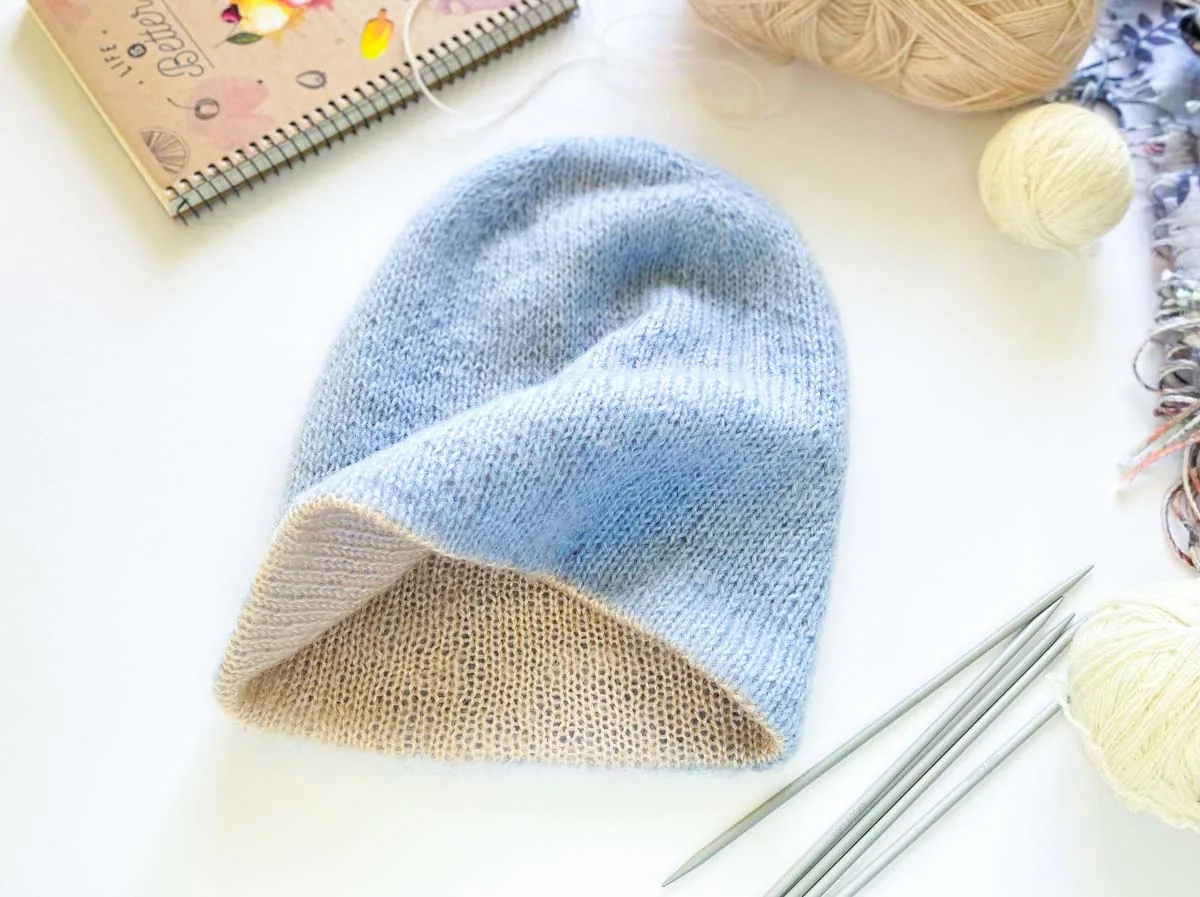
Materials, stretch, and fit guide for How to Knit a Flat Beanie for Beginners
Small knitted accessories are ideal for practicing new stitch textures and using up single skeins, yet fit still matters—especially around brims, wrists, and heads. Accessories that rely on negative ease (such as hats, mittens, and headbands) perform best in resilient wool or wool-nylon blends with strong stitch memory, while scarves and bags can use drapier cotton, alpaca, or linen blends.
- Check brim and cuff elasticity: A cast-on that is too tight makes a hat uncomfortable even when the body gauge is exact; consider How to Knit Gloves with Individual Fingers for flexible edges.
- Swatch in the same mode: If the accessory is worked in the round, swatch in the round—many knitters have slightly looser purl tension when working flat.
- Verify stitch structure: Keep How to Knit a Simple Headband handy so decreases, ribbing transitions, and crown shaping stay neat and symmetrical.
Advertisement
Step-by-step workflow and finishing details
Start by measuring the recipient or using standard sizing charts, subtracting 1 to 2 inches of negative ease for snug ribbed accessories. Place a distinct beginning-of-round marker and check your fabric texture after the first two inches—it is much easier to adjust needle size early than after finishing the crown or thumb gusset.
When you finish, weave yarn tails invisibly along the inside ribs and block gently so stitch patterns open evenly without stretching out ribbing. For related gift-ready projects and techniques, browse How to Knit a Mitten Thumb alongside How to Knit a Warm Winter Hat.
Advertisement
Quick troubleshooting FAQ
Why do my edges curl on a knitted scarf or headband?
Plain stockinette stitch naturally curls at all four edges. Add a 4- to 6-stitch garter, seed-stitch, or ribbed border—or work in a balanced reversible stitch pattern—so the piece lies flat.
How do I avoid ladders when knitting small circumferences in the round?
Pull the first two stitches firmly after switching needles (or when using magic loop) and shift needle divisions by a few stitches every couple of rounds.
Related techniques and guides
Continue exploring this topic with these closely related guides:
Video tutorial
Watch the visual walkthrough below to see the hand movements, stitch rhythm, and finishing details in real time.
Have a correction or a question about this guide? Contact Knitting Guru.